Showing posts with label travel. Show all posts

Monday, January 30, 2012

5-Week Europe Adventure

I have a confession to make. Don't tell my mother, but I don't own a pair of shower shoes. Over the course of five weeks, 6 countries and 11 cities, I never once wore a pair of flip flops into a hostel shower stall. I know, disgusting. After all, there could be cleaning fluid and skin cells and MRSA swimming around my bare feet. Somehow it never bothered me. Armed with only one pair of pants, a hand towel, a return plane ticket from Ireland to Spain, and a puffy backpack that made me feel like I was carrying the shell of a Ninja Turtle, I spent my winter break taking Europe by storm. It is amazing to me how travel changes a person. 4 months ago I couldn't figure out how I would manage to spend the holidays away from everyone and everything I know and love. I couldn't imagine traveling alone for any extended period of time, or navigating public transportation in another language. Nonetheless, despite the mistakes I made and risks I took, I somehow managed to do all of these things; and furthermore I didn't lose my passport, get kidnapped or wind up at any American embassy with a freak hostel-shower-gangrene infected foot. 

It is hard for me to explain to you or anyone what travel and study abroad has changed about me and for me. Maybe everything, maybe nothing - change is a difficult thing to measure. Furthermore, it is impossible for me to fully convey to you; what this trip, this time studying abroad, this change has meant to me. Perhaps I am just young and naive and privileged, but I feel that I trust and appreciate the world more than ever, now that I have really been in it. I may not know who I am or what I am doing here, but there is a whole world out there where I can search for answers and be happy.   

Salzburg, Austria 

Hallein, Austria

modern-day castle, Schloss Neuschwanstein

Hohenschwangau, Bavaria, Germany

Munich, Germany

(intermission for train travel and journaling)

"The Beautiful Fountain" (yes, that's actually it's name)

Nuremberg, Germany from above
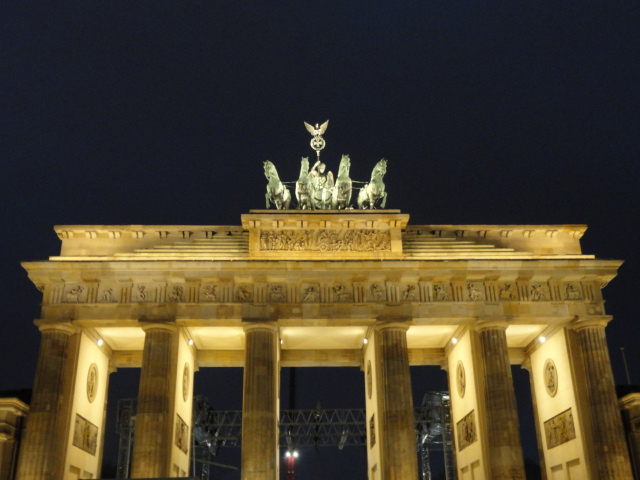
Brandenburg Tor, Berlin

riding the Berlin underground

bicycles + canals = Amsterdam

more boats and crazy Dutch architecture

one mitten short, but jumping for joy in Bruges

picturesque Bruges, Belgium

British Parliamentary buildings

(please don't take photos with the merchandise) in London

[sneaky picture of] Westminster Abbey

 songbird on Trinity College campus; Dublin, Ireland

banjo player I fell in love with in Temple Bar, Dublin

Carrick-a-Rede Rope Bridge, outside Belfast

my yogi friend, praising the sun at the Giant's Causeway
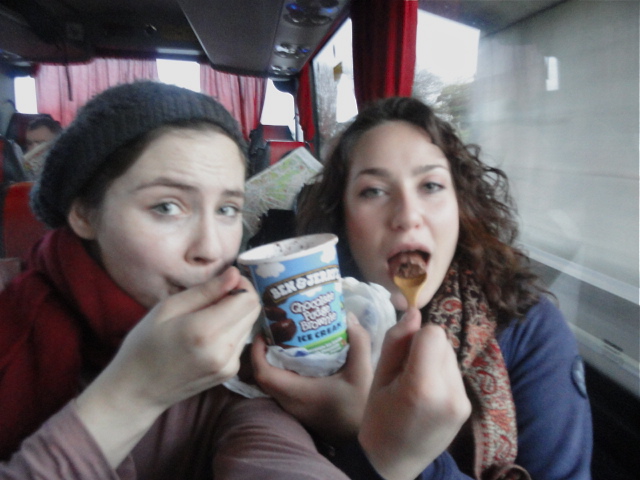
intermission: bus travel; breakfast of champions

tomato soup and Guinness bread for lunch, Inishmore

328 feet above the Atlantic on Dun Aengus, Inishmore, Ireland

another intermission: bus travel and more countryside, Ireland

Cliffs of Moher, Co. Clare Ireland

powerful wind and a scarf-cape

bellying to the edge

2,000 year old Poulnabrone, monument to the ancient dead

kissing the famous Blarney Stone in Cork Ireland

kiss the stone for the gift of gab (and luscious lips)

live music in Cork

delicious strawberry-lime cider, and our last night in Ireland before heading home to Spain

(this is what happens to shoes after 5 weeks stuffed in the bottom of my backpack, 
wrapped in a plastic bag - ewwww)

Wednesday, November 2, 2011

Sevilla, Not Seville

        The semester before I left for Spain, I sought out and grilled a ton of study abroad alumni about their experiences. I distinctly remember this one guy I was introduced to at a party, who had gone to Spain for a month the summer before through a CSU program led by one of my old Spanish professors. I think the reason why I particularly remember this encounter is because, when I asked him how he liked Seville ('suh-vill') he pointedly corrected me in Spanish; Sevilla (Seh-vi-ya). At the time I thought he was just being a total ass hole. 
        Fast forward six months, and I was just now having difficulty remembering the phonetics of its English name. Sevilla, syllables to roll off the tongue, embodies the rare elegance of this city. It is quintessential southern Spain, a lively 2,000 years old, the historic and cultural capital of Andalusia, and the setting of Bizet's Carmen. A few hours from Granada by bus, Sevilla is an absolute dream of cobblestone streets, horse drawn carriages, warm light and women wearing elegant, colorful clothes and horserace hats. A friend of mine who has spent a lot of time traveling in France, says she thinks of it as the Spanish equivalent to Paris.

La Catedral de Santa María de la Sede, or simply la Catedral Sevilla, third largest cathedral and the largest 
Gothic cathedral in the world. ("Let us build a church so beautiful and so great that those who see it built 
will think we were mad.")

Our first night we sat and listened to live flamenco music in this classy little bar (many thanks to Rick Steves). Even more popular than flamenco around here is a simple, beautiful dance called the Sevillana. Spoiler: I've since learned that this is an old Castilian folk dance and didn't originate here as suggested by its name - still, it is tenderly loved in Sevilla). 

A ginormous stained glass window in la Catedral. 
Construction on the cathedral began in 1402 and was completed in 1506.


Religious art out your ears, and of course, 150 grams of Christopher Columbus' body, 
are housed here in this converted mosque. The original structure was the Almohad Mosque,  (1198) 
but after the Reconquista in 1248 and a bad earthquake that damaged the temple in 1356, 
the mosque was almost entirely rebuilt as a Christian cathedral. 


View of the Sacristía Mayor dome from la Giralda; a minaret (tower leftover from the Muslim mosque), 
now capped with a Roman Catholic bell tower. Many thanks to my highly entertaining Historia del Arte professor, who makes information like this memorable.

Horse and carts, cobblestone streets and labyrinths of antiquated architecture
 contribute to the general ambiance of this city.

The famous Esperanza Macarena de Sevilla, in the Basílica de la Macarena - you can barely see the tears of crystal on her face (and yes, as a matter of fact this neighborhood in Sevilla is where the Macarena song comes from).

Outside the Real Alcázar de Sevilla (Alcázar of Seville), a royal palace that was originally a Moorish fort.

Beneath Real Alcázar, the Chamber of Secrets - or los Baños de Doña María de Padilla (Baths of Lady María de Padilla), rainwater tanks named after María de Padilla, who poured boiling oil on her face to disfigure herself, became a nun and moved into a convent, all to dodge the advances of Peter the Cruel, king of Castile and León between 1350 and 1369.

Plaza de España in the evening ....you can also get a pretty good look at this 
Sevillian centerpiece in Star Wars: Episode II, on Naboo.

        My favorite parts of Sevilla; la Parque María Luisa (a sprawling urban oasis that gives City Park in New York a run for its money), trying to dance salsa to flamenco music amongst some very amused locals, and stopping to pet a horse each time I passed through the Plaza Virgen de los Reyes. But the icing on the cake was a panoramic bike tour, right before we left to return to Granada. When we set out for Plaza de España it had just begun to rain. Hard. (First time we'd seen rain in Spain after weeks of being here, and it was right as we were setting out on a parade of bicycles). It was slick and cold and difficult to see, but I was thrilled to be alive and bicycling and out in the rain. Just as we arrived in Plaza de España (abandoned by the usual throng of tourists, who had taken cover), the rain let up and the sun came out, and we took off across the plaza. It was so beautiful; I haven't felt so indescribably, perfectly happy in a long time. I remember thinking at the time - I hope that this is what it is like to die. 

Barcelona: Down the Rabbit Hole

        After five weeks in Spain, I had begun to worry that I was still too reliant upon other people to guide and encourage me in my travels. I had attended well-oiled trips put on by my program; orientation in Madrid, Cabo de Gata, Toledo and Sevilla - all wonderful experiences for which I had to do absolutely nothing but pack some clothes in a bag and climb onto a bus. Ok, so I found a bus and visited Las Alpujarras one weekend. Big whoop. Had I crossed the world just to meekly hide in my bedroom and travel no more? Was I afraid or just lazy?
        Barcelona was such an amazing place; quirky, surprising and unbelievably diverse. Beyond the influence of Gaudí, this city reminds me of a metropolitan wonder land unlike anything Lewis Carroll could have cooked up. However, I need to be fair and credit some of my favoritism for Barcelona towards the trip itself. Barcelona was a landmark; the first place I’ve ever travelled outside of the country entirely on the tide of my own thirst for adventure. I recruited a couple of friends, researched the hostel, booked the flight, figured out all transportation, read a guidebook, picked up a map and took the city by storm. 
         While I wasn't alone - I had a pair of wonderful travel companions - I'm proud to say that this trip was my baby, and I planned and navigated almost exclusively. I guess you could say that I feel like I proved myself to myself in Barcelona. During our overnight stay in the Malaga airport, waiting for our early flight, I hunkered down in a cafe booth with a cup of coffee and Lonely Planet, and wrote down my own personal, day-by-day itinerary (sounds compulsive because it is, but the payoff? I felt like I did and saw all of the best of Barcelona by the time we left). I, someone with no natural sense of direction, wielded our tourist city map like a wizard, and when we had to plan our way back to the airport for 4 o clock in the morning (oh those cheap, painfully early morning flights), I called and booked the taxi, in Spanish. Besides a little difficulty finding the underground hearse museum, deciphering between Catalan (a hybridization of Spanish and French spoken in that region of Spain - weird), and sleeping in a dorm style hostel room with some very rude French students, I breathed a sigh of relief when we arrived back in Granada... my independent travel had gone off without a hitch. Barcelona made me feel young and alive and dauntless. I have the desire to experience the world - all I need to do is trust that I can fend for myself in the great blue world.

Mercat de Plaça de Catalunya

Strolling down Las Ramblas, stopping to smell the tiny flowers.

Chocolate champiñones, part of a mind boggling selection of sweets in Mercat.

We met Aslan and some of his brothers in Plaça Carbonera (and of course we each
had to take a picture riding a lion).


Port Vell at night; this boat is a part of the maritime museum collection -
we got to climb on board and explore.

Inside a beautiful little church that we happened to stumble upon, the Capella de Sant Cristófol.


Beneath the city, in the underground exposition of Museu d' História de la Ciutat;
the exposed ancient Roman ruins of Augusta Barcino.


Directly above the Roman ruins, another layer of Catalan history; la Capella Reial de Santa Agata.

The Cathedral of the Holy Cross and Saint Eulalia, completed in 1450.

Sepulcher of the Count of Barcelona, Ramon Berenguer I, 
founder of the second Romanesque Cathedral (1058).


In the courtyard of the Barcelona Cathedral.
(There were also white geese in a little fenced in area, that was kind of random.)

Eglésia de Santa Maria del Mar, built between 1329 and 1383 and situated in the swanky 
La Ribera neighborhood (I just never get tired of Gothic cathedrals).


The crypt in Santa Maria del Mar was supposed to be closed, but I managed to pull the door open and went down anyway - turns out some guys about my age were using it to change before a
ceremony about to start in the chapel. Whoops. I asked them if they minded and they just
seemed to think it was funny. Anyway, I was very pleased with these photographs.

Looking out over the city from the entrance of Park Güell.


Whimsical designs by Gaudí in Park Güell.


Just outside the Museu Nacional D'Art de Catalunya - many tourists mistakenly go to the Museu Picasso because of the headliner name, but this is the collection to see in Barcelona.


Pieces seen while wandering through the Gothic, Renaissance and Baroque halls. Much of this collection was rescued from old churches before their destruction, and the stark contrast between these well aged religious works and the modernity of the museum's clean, white, modern walls is thrilling. 

My favorite piece in the museum: Sacrifici d'Isaac by Giambattista Piazzetta (1714).

Upstairs in the modern art wing: Nen malalt (Octavi, fill de l'artista) by Ricard Canals (1903).

A pensive man in the Jardins Joan Macagall in Montejuïc, overlooking Barcelona.

Gaudí's Casa Batlló - we didn't go inside because it was 13 euro for student and we were all pretty broke at that point, but apparently the interior structure and embellishment is even more impressive.


In Casa Amatller (also along the famous Manzana de la Discordia on Passeig de Grácia) 
this one by another Modernist architect, Puig i Cadafalch, completed in 1900. 


Of course, what we've all been waiting for, the jewel of the Catalan Modernista movement; Antoni Gaudí's  la Sagrada Família (Basílica i Temple Expiatori de la Sagrada Família, or the Basilica and Expiatory Church of the Holy Family). Begun in 1882, it is expected to reach completion in 2025. This was taken from the angle of the Nativity Façade.

Gaudí's Sagrada Família demonstrates both his mathematic genius, with geometric elements to the design,  and his appreciation of nature, with columns and natural light that uncannily resemble a forest.

Inside la Sagrada Família: a church truly unlike any you've ever seen.

In the center of the church, a view of the ceiling and the four evangelists;
 Juan (eagle), Mateo (angel), Marco (lion),  Luca (bull). 

On the door of the Passion Façade and the main entrance, Latin for 'what is truth?' 

The austere, almost skeletal Passion Façade over the main entrance.


Museu de Carrosses Fúnebres: translation, our own personal basement hearse museum, 
a deliciously eccentric, macabre collection of hearses dating from the 18th century.